How to Sell Your Home Faster

Sunday, March 05, 2017

People buy homes for different reasons.

If you are putting your home on the market, you'll want to appeal to as many of those reasons as you can. The result will be a speedier home sale.

It’s easier than you might think to make your home appealing to more people. That’s because there are certain qualities most home buyers want.

Here is a list. If these features don’t already exist in your home, it’s sometimes possible to add them economically or else stage your home to create the same impression. 

Less formality

The trend is toward more open spaces. Create the look with less clutter. Matched floor coverings and seamless color schemes help, too, as does casual furnishings.

Move-in ready

More than anything else, most buyers want a no-hassle move. They should not have to make immediate repairs. Have a home inspection done and take care of deferred maintenance before listing.

Primary bedroom

Because who doesn’t want a special room off-limits to the rest of the world? If you don’t have a bedroom ensuite as part of your floor plan, be sure to make the primary bedroom and one bath feel like a private retreat for grownups.

This bedroom exhibits the luxurious look of a master bedroom. 
The horizontal lines of furnishings and window treatments create the 
illusion of spaciousness. Photo: Shea McGee Design.

Light-filled spaces 

As long as privacy is assured and the view is pleasant, the more windows a home has, the better. Create the feeling by staging with minimal window dressings that make openings look large. Paint with pale colors. Use more-than-adequate lighting. 

Modern kitchen 

Buyers fall for spacious kitchens that boast upscale appliances. Here is one place to make some investments if your kitchen is out of date. You don’t need a remodel to buy a new fridge or stove. A spotless, bright, uncluttered kitchen feels more modern, too.
Not everyone demands a huge kitchen.
Up-to-date appliances
and cleanliness go a long way.
Photo: Pamela Dailey Design.

Storage solutions

No one has too much storage space because most of us have too much stuff. Clean out your closets and stage them to look roomy. Make smart use of all your storage areas by compacting and organizing your things.

Technology

Ideally, your home has wireless compatibility throughout. Upgrade the electrical system up to today’s needs. Stage a space as a charging station. Remove outdated entertainment systems (looking at you, jumbo dish, roof antenna, and bulky TV armoire!).

Energy efficiency

HVAC systems and energy-efficient windows are important but expensive. Keep your home at a comfortable temperature while it’s on the market. Yes, ceiling fans are still okay.

Outdoor spaces

Usable areas for entertaining and relaxing outdoors are priorities for most buyers. It’s economical to create these spaces on even the smallest lots, even if your outdoor space is just a balcony. If you have a side yard, or a front porch or deck, make it look like a place that is useable as a spot to spend time. Some outdoor wicker or metal furnishings add that casual vibe buyers like. 

Stage and promote

Create closet envy with an arrangement anyone
would love. Pack your non-essentials up and
stage it glam. Photo: Akin Design Studio.
   
Your buyer is out there and ready to be educated about your home.

Therefore, it’s important to be specific about the desirable features your home has. Make these specifics part of your MLS listing, your Realtor’s promotional info and online descriptions.

When you talk to neighbors, family, colleagues, and friends about your home for sale, let them know what makes your place special.

If the heating and cooling devices are new, document it. If the patio is shaded in summer, make sure buyers know. If there is additional storage space in the attic, mention that in the online specs. If your HOA maintains outdoor spaces, be sure to include that in the listing. If you’ve done major repairs that might not be obvious, make sure your Realtor knows about these. (Tip: Don’t call them repairs. Call them upgrades.)

I encourage you to consider the ways you can add or imitate the features that people want in a property. The sooner you meet these needs and market your home around what today’s home buyers expect, the sooner you’ll sell your home.

And when your home is missing some of these key ingredients, home staging can make up for the shortcomings. Download my home staging eBook to learn more about how you can make your home more appealing to more people.


Six Common Mistakes Novice Homestagers Make

Saturday, February 04, 2017

Staged homes sell faster and for more money than unstaged homes.

But, what if you can’t afford a professional home stager to come to your place, create a plan, and supply what’s necessary to have your house look like a model home?

Answer: You do the work yourself of course. The problem is you may not be able to detach yourself from how your home usually looks.

Let’s review the common mistakes that homeowners make when they stage their own homes, and how to avoid these pitfalls.

1. Pushing all furniture to the walls

When pieces of furniture line the perimeter of the room, the room looks uninviting and boring, a little like your doctor’s waiting area.

It may seem to be an approach that makes the best use of square footage, but instead, you’ve created a space that looks strangely uncomfortable.

No matter how small the room, there is always a way to cluster some of the pieces in groupings that look friendly.

If you can’t think of a different way to place furniture than around the edges of the space, it’s time to remove some furniture.

Put your largest and heaviest pieces of furniture on sliders and start playing around until the room looks balanced. Then fill in with the smaller and lightweight pieces until you get a look that’s interesting and functional. Try diagonal furniture placement, and pulling pieces away from walls.

Remember that a traffic pattern does not necessarily have to run through the center of a room. Download my eBook on furniture arranging to help you solve these kinds of problems.

This room suffers from an unimaginative arrangement
of furniture. The two couches could
have been placed at right angles
to create a conversation area

2. Too many DIY projects

Sure, they save money, personalize your home, and are (usually) fun to do, but an excess of homemade crafts in your home can cheapen the property. 

Of course, it all depends on your level of skill and your vision, but prime examples of common DIY fails are handmade seasonal decorations like wreaths, chandelier makeovers, an excess of glitter or Mason jar projects, and skimpy window treatments.

I suggest sticking to what you do well, perhaps sewing, painting, or refinishing furniture, then find the items you need elsewhere. My favorite sources for those things that dress up your staging are Overstock, Tuesday Morning, T.J. Maxx, garage sales, and thrift stores. And this is important: Train your eye to what looks high-end.

You can always resume your crafting projects when you move to your next home that you can decorate to please only you and yours.

I know Country Living meant well when it
suggested spray painting a collection of
beer bottles,  but it's probably not the kind
of decorations that will enhance a staged home. 

3. Lack of color

In our rush to make a home-staged house look clean and cohesive, it’s common to see rooms decorated in boring color schemes – all grey or all beige, or even all white.

Best bet: Base your color scheme on three colors – a neutral background color, a second color that is adjacent to the first on the color wheel, and a third color as an accent. The third color can be a deeper shade of one of the first two colors, or a color that appears either opposite them or near them on the color wheel. 

The top photo from Shea McGee Design shows that a palette centered around grey and white looks beautiful with accents of blue.

A color scheme can be harmonious without being monotonous. Here’s more help from me on choosing paint colors for your home the easy way.

4. No budget

Every successful project starts with a plan about how money will be spent. Knowing what you can afford and what products and services actually cost is a start. A budget will reduce emotional stress because it gives you a spending framework and you’ll receive the satisfaction of knowing you’re making smart financial decisions.

The amount of money you spend to stage your home depends on the size, condition, and style of your property.

In a hot real estate market, you can probably use more of what you already have, saving money. And if you can do most of the work yourself, you’ll spend less.

But if homes are selling slowly where you live, you may have to spend something in order to rent or buy some furnishings so you can stand above the competition. That’s just business!

Start your home staging with a list of what needs to be done or purchased and then estimate the costs. Prioritize the list, and look for cost-cutting methods.

5. Art that doesn’t help

A large abstract like this painting by
Lindsey Meyer adds the right amount of
punch to the space. Notice that it is
hung at convenient eye level and 
doesn't float far above the table
I can’t stress enough the value that art adds to a staged space. But often pieces of wall art are hung either too high or (less commonly) too low.

Art used for home staging needs to be non-distracting and non-controversial. There are certain subjects that make people feel good, and these are the subjects experienced stagers rely on – things like landscapes, still lifes, and abstracts. For more tips on using art to help sell your home, see my linked 30-day blog series about that topic.

6. Not enough detail

We’re all working to minimize clutter. We’re told to get organized and to simplify our surroundings. But many new stagers will remove the very things that add interest to a space, the accessories that add decor layers and invite people touring a home to slow down.

These are the details that make a home look loved and lovable. I’m talking about things like plants, artwork, books, boxes, trays, bowls, and pillows. Focus on generously sized objects because they “read” well and because they won’t be stolen.

I hope you find these tips and reminders helpful when it’s time to stage your own home for the real estate market. For more advice to make your home competitive in the marketplace, download my easy-to-follow home staging eBooks and start staging today.


7 Ways to Jump Start Your Homestaging

Monday, January 16, 2017
When it's prime time to list a home,
will your property be ready?
 
Most real estate agents agree that spring is the busiest home-buying period. Families with children want to move as soon as school ends and others want to make a purchase early in the year for income tax reasons.

By March they say the home-buying market cools. These stats mean that if you want to get your home listed in a friendly market, you want to get staging it now!

Don’t be overwhelmed. When you take home staging step by step, you won’t waste time, you’ll keep the stress level in check, and you’ll sell your home soon at a price you like.

One: Dump the junk

Getting rid of what doesn’t flatter your home should kick off your plans. It’s a great place to start because you won’t be spinning your wheels organizing and cleaning what we can consider clutter. 

Give yourself a deadline for having your home excess-free. Setting milestones along the way makes the process smoother. “By Thursday I’ll have the bedroom closets scaled down to essentials.”

If you need to store belongings off-site, now’s the time to locate a place.

Two: Give rooms names

Buyers get confused when a room doesn’t appear to have a singular purpose. Each room in your home needs to shout its function. “I’m the master bedroom!” “I’m the home office.” “I’m the family room.”

So, if you are currently using your dining room as homework central, or your guest room as a crafting place, now’s the time to scale back and make it easy for buyers to see rooms for what they are.

At the same time, you might want to tuck a home management desk into a corner of the kitchen if there is space for it, or a reading spot in a large bedroom. Just make sure you aren’t crowding the space or going in too many directions with multi-purpose rooms. 

Comfort and practicality are selling features
that don't require much furniture.
 

Three: Check the traffic flow

How you move through your home on a daily basis may be different from the way home buyers tour your home. Try this: enter from the front door. Look around. In what direction would a guest go first? Is the traffic pattern obvious and unobstructed? Does each room appear spacious? Do doors open wide? Are the selling points of the home sure to be part of even a quick tour?

If you need tips on rating your floor plan and traffic path, you’ll find them in my eBook, How to Arrange Furniture. The placement of furniture in your rooms will point people in the right direction and make your spaces feel both friendly and functional. 

Four: Choose your furnishings

Now that you know how you want your rooms to function and how you want people to walk through them, you can decide which major pieces of furniture should stay and which have to go. Most of us own too much furniture. The pieces that need to be removed can be placed in storage (off-site is best), loaned to friends and family, or sold.

Choose the furnishings that convey the lifestyle most people aspire to – one of success and comfort. Ask yourself, “Does the furniture look like it belongs to a rich and happy person?” Sounds silly, I know, but isn’t this what most people aspire to?

Repair, recover, repaint or replace… Do whatever it takes to make your home look polished and desirable. For inspiration, thumb through shelter magazines and scan popular Pinterest rooms.

Five: Schedule tasks

Put rehab money where it matters --
baths, master suite, kitchen.
 
No plan would be complete with a timeline. Now that you know what you want your rooms to look like, you can determine what needs to be done and give yourself some deadlines.

Make a schedule however you like – on paper, your phone, a whiteboard, a spreadsheet, or in your mind -- whatever works for you.

You may prefer to tackle your tasks room by room, or cluster your work by the tools they require. For example, I like to save all my spray painting projects for the perfect day. And I will clean all the ceiling light fixtures when I have a step ladder out. Plan ahead and think like an efficiency expert.

Six: Give yourself a budget

This can be tough. When you’re selling a home, your mind is often fixed on saving for a down payment and for the money to personalize your next home.

Homestaging can require a big chunk of money or it can be done on a shoestring. It depends on the condition of your home, the market for your home, and how it will be priced. Now would be a good time, if you haven’t already, to lock in a real estate agent who can estimate selling price.

Like many other projects, whether a vacation or wardrobe makeover, you might plan to splurge on a couple of major luxuries, and then let other homestaging “needs” stay as “good enough.” The golden rule here is that infrastructure comes first and cosmetics second. In other words, make sure roofing, plumbing, electrical, and structural systems are sound before you buy a new living room sofa.

With a rough budget in mind, you can plan what needs to be purchased and what could be borrowed or rented. Factor in costs for necessary contractors such as a carpet cleaning service, handyman, plumber, landscaper, house painter, handyman or electrician.

Seven: Make it fun

At this point, you can turn your attention to nitty-gritty staging. I like to have a “staging area,” where I can collect what items I know will stay, where I can keep tools, fabric swatches, paint chips, lists, props and other accessories.

It’s time to plan your color scheme -- one that will unify the whole house. If you are unsure about some decisions, ask a friend whose taste you trust or seek advice at a paint store.

Your home is bound to continue to look increasingly like a model home as you fine-tune your furnishings and maybe continue to pare down your belongings. Before you know it, you’ll be ready for that initial showing. Next step: a purchase offer!

There’s much more advice on how to stage your own home in my eBook, DIY Homestaging Tips to Sell Your Home Fast and For Top Dollar. a 155-page PDF that you can download now and view on any device.

All above photos: Better Homes and Gardens 


Houseplants Even You Can't Kill

Monday, January 02, 2017

Plants breathe life into a room. I’m pretty sure most of us already know that greenery adds style to any décor. 

Their natural good looks add believability and freshness to a room.

As a bonus to home stagers, living plants are natural mood elevators, a fact that home sellers can use to make buyers feel good when they are touring a home on the market.

Not only do houseplants make a room look and feel fresher, they actually clean the air because they take in carbon dioxide and process it into oxygen. Meanwhile, they absorb harmful, common air pollutants that outgas from synthetic finishes and cleaning products.

And yet, some of us are resistant to make houseplants part of our home staging package. With valid reason. You have to take care of them!

The good news is that there are plants that don’t ask much in the way of care. They are the goof-proof house plants that seem to thrive on neglect. Here is my list of favorites.

Snake plant tops the list

It's also known as mother-in-law's tongue, but technically it's called Sansevieria trifasciata, and that's a mouthful of Latin! 
You say you have a brown thumb?
Not a problem if you stage 
with a snake plant like this. 
The beauty of these plants is that, well, they are beautiful, with their strong upright structure and bands of dark greens.

The snake plant lets you get away with minimal watering. It doesn’t ask for much sunlight, so it can sit in a low-light corner and still be happy.

Add fluff with ferns

Ferns are one of my favorite plants, an opinion shared by many. They are graceful and versatile. Because they are tropical plants they want more water than a snake plant, so keep them where they will not damage any surface in case your container sweats or could leak. Ferns are happiest in bright or filtered or indirect sun.

Whatever your personal taste or decor style, you'll find a fern variety that fits the bill.

I like to give fern plants a cleaning in the shower to provide the humidity they prefer and to get any dust off the fronds. Let them soak up the water and then drain well before putting them back in place. Rotating a fern occasionally will keep the growth balanced for a better appearance.

Ferns are perfect space fillers for almost any room in the house – a home office, kitchen, bedroom, bath, or communal living areas. If kept watered, they will not shed, wither or discolor. When a home is staged to sell, a plant making a mess or looking unhealthy can hint that the home itself has not been cared for. Tidy wins the day.

My aglaonema plant grows slowly and never gets bugs or diseases. Perfect!

Chinese evergreen asks for almost nothing

I have an aglaonema plant, also called Chinese evergreen, that I admit to forgetting about for a couple weeks at a stretch. And it forgives me every time, bouncing back after a soak in the sink and a little pruning of any yellowed leaves.

This ability to live without much attention makes the Chinese evergreen plant a good one to place in an unoccupied, staged home.

Chinese evergreens are content with indirect light so they can sit in an unsunny room. One of the worst places you can put any plant is next to a window because light enters the window but light rays do not bend to reach sideways.

Don't sneer at philodendron

We've all seen these rangy plants in stores and offices, with their heart-shaped leaves spaced along dangling stems. However, a philodendron that is well cared for is compact and handsome. Its glossy leaves and tolerant manner make it one of the most common indoor plants, one that is currently enjoying a return to popularity.

Philodendron plants are at home in almost 
any setting and unlike some houseplants, 
don't mind if you move them 
from one place to another. 
There are many varieties of philodendrons. Some fruit or flower. Some vine and need a support and some are content to stay in their pot. Some have huge leaves and others appear less jungle-like. They all prefer medium light but will tolerate low light. You can't go wrong with a philodendron!

Dracaena looks architectural

Called the corn plant, this one could be the easiest one on our list to grow. Shown in the top photo, dracaena look like a small tree with sword-shaped dark green leaves accented with a creamy middle stripe. They prefer bright light but will tolerate low light.

The corn plant can add an upright form to a room that lacks architectural interest. They are good space-fillers useful for staging a home that doesn’t have quite enough furniture. Because they don’t require bright light, they could be the right plant for an entry or hall that doesn’t receive much natural light.
Big or small, alone or in groupings, prickly 
or smooth, cactus plants love you back.

When in doubt, grow cactus 

I’ve written before about how handy faux cacti and other succulents can be when you are staging a home. All the real ones ask for is bright light and dry conditions.

The easiest to tend -- if you can call it that -- are the desert cacti. An added bonus to these varieties is that they usually have interesting shapes and textures. They especially look good clustered in an interesting planter. Even in winter, while all cacti are dormant and require even less water and feeding, they still add some pizazz to the home staging environment.

Basic care for these fuss-free plants

All these easy-care plants benefit from a mild fertilizer in spring and summer and less water in the winter than the rest of the year. They need to be kept away from drafts and direct heat. Use a good potting soil that lets their roots spread out and that drains well.

None of the plants described here are expensive to buy or difficult to find. Big box home improvement centers stock them year-round. If you want to leave them in a plastic pot it’s easy to place that pot in a larger, more impressive container as long as the plastic one doesn’t show because that just looks amateurish. You can use sphagnum moss or rocks to cover the soil surface and disguise the gap between the two pots.

Make sure your plants are not root bound. Just press them or pop them out of their containers to check for signs that the roots are crowded.

Some houseplants are fussy. But the economical and forgiving ones I've described here are no-brainers. And they really liven up a room. Why not put their almost magical powers to use in your home staging?

Get the look, get the book

Want more tips on how to sell your home faster for more money? Download my homestaging eBooks today and start staging your own home!

Four Ways to Beautify Your Home

Monday, May 16, 2016
Does the thought of staging your own home overwhelm you?

Not sure where to start?

Confused about what you need to do to attract a buyer?

Worried about the competition and how much money you’ll spend?

And how much time you’ll devote?

If that sounds like you, relax. You’re normal! Depending on the condition of your home, its price and your market, staging can happen in a day, a year, or anything in between. And the budget for time and money can range from minimal to frightening.

But one thing is certain. If you concentrate on the following simple projects, your home will look like it’s had a beauty makeover, even if you don’t tackle any major projects.

Add some surprises


Tips about how to stage a home always include advice about using a monochromatic color scheme. But that doesn’t mean a home should look bland. The place to put splashes of color is where you want people to look.

Once you determine the focal points in your home, like the dynamite seating area pictured above, think of ways to bring attention to them. Color is the easiest way. Here are samples.
  • To emphasize a fireplace, stage the mantel with items that introduce a new color to the room. 
  • When the view is special, window treatments that add color will pull the eye in that direction. 
  • A gorgeous entryway deserves some special artwork or colorful furniture. 
  • Strong colors on outdoor furniture will show off your home’s outside living space. 
  • A colorful headboard will add focus to a bedroom that lacks architectural interest.

Make Monochrome work for you

The best-staged homes have a seamless color scheme. Here’s an easy way to determine if you already have a color scheme that makes your home feel as large as possible: Ask yourself if you can move furnishings from one room to another and still have the colors looking like they belonged. Would your choice of throw pillows for your living room still look good in your bedroom? Would the curtains in the family room look good in other rooms as well?

It sounds boring, but trust me, your home will look bigger, cleaner and newer with totally coordinated colors.

This use of a simple and consistent color palette is especially important to problematic floor plans, where rooms may seem to be isolated or cramped

Big art gives the impression of spaciousness
and adds a focal point, calling
attention towards one area of a room. 
How to achieve this? The short and simple list is paint and fabrics. Here are examples. 
  • Spray paint lamp bases, vases, and other small accessories that don’t fit your new and improved color scheme. 
  • Recover your pillows that need a color switch. 
  • Paint all interior walls the same color. 
  • Use slipcovers to make upholstered pieces match. 
  • Paint or recover upholstered pieces.  
  • Re-paint furniture that’s already painted, converting it to one of your chosen colors.

Create a sense of place

Everyone wants to feel part of a group or family they are proud of. You can capitalize on that desire by promoting your location. Choose what's special about where you live -- the neighborhood, the climate, the view, the history, the multi-ethnicity – and promote it in your staging as well as your MLS listing.

Here some examples of ways to promote location. 
  • Hang a poster on the wall that advertises a local event or destination such as the annual art festival or an historic site in town. 
  • Display tennis rackets or golf clubs in the family room to emphasize the nearby community courts or golf course. 
  • Add coffee table books about your city, town, neighborhood or area of the country. 
  • Landscape to emphasize your environment, like flowers, shrubs, hardscape and even garden art that is special or indigenous to your area.
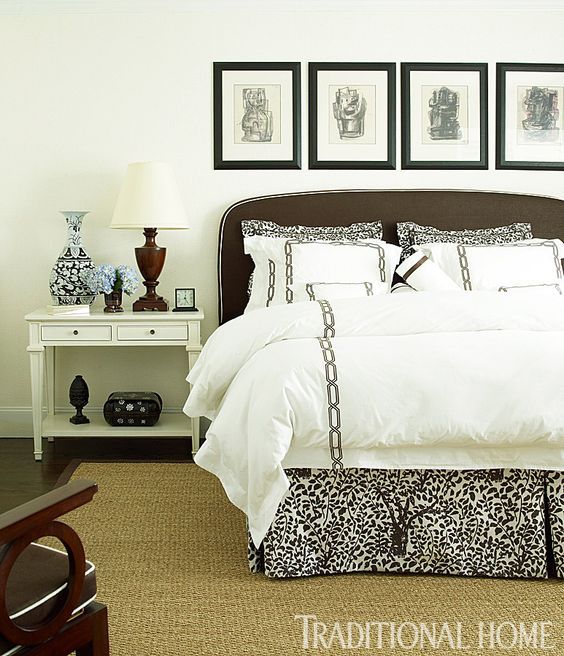
Just because a room is decorated around
a simple color scheme --
as in this black and white bedroom --
doesn't mean the space will look dull. 

Go big or put it away

Oversized accessories are what give a space some weight and importance. Get rid of the small stuff and substitute some accessories with mass.

The easiest way to accomplish this is to do a walk-through of your home and make a decision on any item smaller than a coffee mug. Ask yourself, does it add appeal to the room? If you decide it should stay, and it is small, you can cluster it with other items on a tray, mantel or shelf. If it’s too functional on a daily basis to discard, can you stash it inside a handsome container?

Anything small in this beautiful vanity area bath
has been gathered in a basket to reduce
visual clutter. Photo: Traditional Home
Here are suggestions for supersizing.
  • Remove small area rugs unless essential to keep outside dirt from entering your home. 
  • Clear countertops and stage with big, decorative items. Hide the unsexy things inside pretty things. 
  • Replace small lamps and other necessary furnishings with simple, larger ones. 
  • Store small decorative items until you move to your next home. 
  • Clean up your bookshelves by removing small items. 
  • Replace small wall art with larger pieces, and yes, you can DIY big art!

Get the look, get the book

Beauty is in the eye of the beholder, but there are certain universal features that all eyes agree on, like cleanliness, spaciousness, and comfort. You can make a home more beautiful and irresistible to buyers by focusing on those desires.

Are you staging your own home? Do you stage other people’s homes? You’ll find advice like this and so much more in my home staging eBooks. You can download now and start your staging today!.


Top image: Traditional Home

Three Steps to a Quicker Home Sale

Friday, February 12, 2016
DIY.HomeStagingTips,house
Are you waiting for your home to sell?
Or are you doing more than just waiting? 
It’s common for sellers to put their home up for sale, and wait…and wait. And wonder why they’re not getting offers.

Let’s assume that your home is in good shape and that it is clean and staged to appeal to most buyers.

Your Realtor has priced it competitively. You’ve had showings. And you’re still waiting for a serious offer. Maybe there’s more you can do. 

Maybe selling your home faster for a better price is as simple as making friends, or more accurately, nurturing friendships. Here’s what I mean.

Befriend the buyer

No one likes a friend who’s needy, demanding, or deceptive.

You don’t have to become friends with every prospective buyer, but being friendly will go a long way toward building trust. Generally, it’s unwise to meet the buyer, but you can still look like the good guy by being honest about your property in the MLS listing and when you respond genuinely and promptly to any questions or concerns they have.

Be honest in your staging techniques as well. Never hide serious problems behind furnishings or landscaping. This kind of trickery has been known to erode trust between seller and buyer, and often blow the entire deal out of the water.

Paperwork that shows you have maintained 
your home always impresses a buyer. 
Another way to befriend the buyer is to make sure all the necessary paperwork is available and accurate. Buyers are impressed when a home seller has records of repairs and upgrades, user manuals and warranties for major appliances, and receipts from paid utilities and taxes. Not only does it build faith in the homeowner’s thoroughness, but it helps prospective buyers predict their actual costs.

As soon as buyers show interest in a home -- whether they read the specs online, hear about your place from their agent, or see the for sale sign when they drive by -- they form a mental image of you, the seller. You want that image to be favorable.

To that end, keep your home clean and repaired. Cleanliness matters. It makes people feel good. It helps them think clearly. It gives them confidence.

Make it easy for them to tour the home, even on short notice. Everyone wants a friend who’s obliging.
DIY.HomeStagingTips
Neighbors close by can help you sell your home, 
so don't keep them in the dark.

Be courteous

When you receive an offer, any offer, always counter with your own offer. A friend never rebuffs or ignores you.

You don’t want to reveal too much about yourself, especially anything that could encourage the buyer to chip away at your asking price or make a lowball offer. If you are getting a divorce, or have to move by a certain date, or are nearing foreclosure, that’s none of their business.

Most people, in the absence of real information, will fill in the blanks with wishful thinking. They want to believe you are a good, hardworking, ordinary citizen wanting to sell your home to them at a fair price.

Befriend the Realtor

Although selling a home is a little like running a small business, it’s also like cultivating a friendship. You can’t be inconsiderate and expect your Realtor to behave like a saint. Be polite when you talk. Be professional when you make decisions. Take her advice. Show appreciation for her assistance.

The relationship you cultivate with 
your listing agent is one of the 
most important relationships you can have. 
I wrote about more ways to be the perfect client when I wrote about the reasons your home isn’t selling.

Befriend anyone

The more people know that your property is for sale, the greater the chances that it will sell sooner rather than later. You don’t have to plaster your neighborhood with posters (in fact, most Realtors don’t want you to circulate your own literature) or email everyone where you work, but you can still spread the word.

Your neighbors will know your home is on the market, but they may not have the details. You can help your agent (and yourself!) by keeping the brochure box out front stocked with clean, dry, printed handouts of your MLS listing.

Some sellers don’t want co-workers to know they are selling their homes. If that’s you, examine your reasons for secrecy. If there are valid reasons to keep the matter under wraps, like a confidential transfer within the company, or a pending job offer that requires relocation, or that creepy guy in the mailroom who looks like a stalker, that’s one thing. But if you just don’t like the idea of the people you work with knowing how your house is priced, you could be sabotaging a potential sale.

Harness your social and business networks to let people know that your home is listed. You might even begin spreading the word before listing with a Realtor, but make sure you have made any upgrades or repairs you’ve planned. 
It’s also smart to declutter, clean, and start staging before you invite the neighbors over for a party where you’ll casually drop the fact that you’ll be selling soon. Most people would like to have someone they know and like move into their neighborhood. That means your neighbors can be part of your unofficial publicity committee.

The quicker your home sells, the better. There’s less stress, and less financial obligations like taxes, insurance, and utilities. The longer your home is on the market, the more “stale” it looks to prospective buyers and agents alike. Following this three-step path to becoming a better seller will put you on the fast track to that incoming purchase offer.

You'll discover even more tips to make your home staging successful when you download my home staging eBooks. It's easy when someone who's been there passes along advice learned in the trenches. 


How to Choose Your Listing Agent

Thursday, January 07, 2016

When I first started investing in real estate, I had no idea how to select a real estate agent.

I counted on the advice on friends, and on which agent had the most listings, and even how I liked the way she sounded on the phone.

Although some of my approaches might have worked out okay, I know now that they were just as likely to connect me with an agent not suited to the task at hand.

I was lucky in that I eventually found Realtors I loved working with.

I want to pass along these ten danger signs that an agent isn’t the right fit for you. Once you understand the signals, you’re more likely to connect with an agent who will make your home-selling process a smooth and profitable one.

1. Prices your house wrong

Your agent should not suggest a listing price that is much higher than what other agents suggest. You should be interviewing at least three agents. Too low and you could be leaving money on the table. Too high and the home will sit on the market. All agents have access to the same comps to determine fair market value for your home.

2. Lives elsewhere

Choose a Realtor who lives in your area, not in another town. He probably doesn’t know your neighborhood as well as someone more local, and it may not be convenient for him to always show the property.

3. Is related somehow

Don't choose someone who is a family member, a good friend, or even a friend of a friend. It's always best to keep serious business transactions separate from your social or family life. Following this guideline, decisions are more likely to be based on facts and reason, not emotional ties of loyalty or obligation. If you want to hire a friend or relative as your agent, make sure he doesn't wave any of the other flags listed here.

4. Works out of the loop

Is your agent familiar with online marketing?  Any Realtor who does not have an online presence and is not comfortable with ordinary functions like emails, texting, and virtual tours cannot compete with the tech-savvy buyers that saturate the market. Find someone who’s up-to-date. Having a working knowledge of Twitter, Facebook, Instagram, FaceTime, Zoom, and Skype is a good sign.

5. Doesn't value photography

Look for an agent who makes an effort to take good photographs or -- better yet -- arranges for a professional photographer. Without good photos, your home will sink to the bottom of the market because buyers usually begin their home search online by looking at pictures. An agent who is a poor photographer is often one who does not endorse home staging, and I guess you already know where I stand on that!

The Realtor you choose should be able to provide you with both great interior and exterior photos. Photo: Architectural Digest.

6. Communicates poorly 

You want an agent who is relatively easy to reach. We're all busy, but you shouldn't have to jump through hoops to get answers. Red flags are a Realtor who doesn't promptly return phone calls, doesn’t answer all your questions clearly and accurately, or won’t explain to you the marketing strategy he plans for selling your home. Communication is key to building a solid, trustworthy, and pleasant relationship. Ask how the agent prefers to communicate, whether by texting, phone calls, or emails to see if it fits your preference.

7. Doesn't match your needs

Read the current real estate listings of the agent you are interested in hiring. Does she typically represent buyers with homes that sell in your home's price range? While you’re looking at her listings, read them to determine if the properties are being marketed well. The listings should be inviting and informative. 

8. Is the wrong age

I'm going to step into politically incorrect waters, and suggest that your agent be neither very young nor very old. Younger agents may not have the experience and older ones may not be skilled in today's technology or be in touch with what young buyers expect in the way of speed and service. Age alone isn't any reason to skip over an agent because a new agent might be more motivated and an older one might have a long list of people ready to buy, but age might be something you could consider. 

9. Practices as a hobbyist

Avoid that agent who sells real estate as a part-time job. You want a full-time agent, educated about the industry, dedicated to his job, who can be available when buyers and you need him, and who has no conflict of interests. He should also dress and act professionally and behave ethically. 

10. Has no magic with you

It's ideal when your agent and you just hit it off from the start of conversations. It's difficult to describe because it has to do with following your gut. Are you comfortable with the Realtor? Do you feel better or worse after a discussion with him? Does he share his expertise and contacts with you? Do you trust his negotiation skills? Do you feel he’s willing to go the extra mile to help sell your home? Your initial instincts are usually correct.

Once you decide to put your home on the market, ordering my homestaging ebook and hiring the right agent are the next important decisions you’ll make. The wrong agent will slow the sale of your home, fail to find a good buyer, and make the selling process stressful and complicated. But the right one makes it look easy and profitable. So keep these tips in mind when you interview Realtors.

Seven Simple Ways to Upgrade the Look of Your Kitchen

Thursday, November 12, 2015
Buyers will swoon over a state-of-the-art kitchen. And they will often walk away from a house where the kitchen isn’t what they hoped for.

You don’t want to be trying to sell a home with a deal-breaker kitchen. But you don’t want to (cha-ching!) spring for a total kitchen remodel either.

The good news is that there are ways to make a less-than-perfect kitchen look lots better without spending lots of money. The secret is to put your dollars where they’ll do the most good.

Bright lighting

Good illumination is important for a clean, modern look and it signals that your kitchen is a serious, functioning space. Get the maximum wattage you can into both your task lighting and your over-all lighting, and make sure your Realtor knows where the switches are.

Budget tip: A statement ceiling fixture, even an inexpensive knockoff or DIY project that started at Habitat, is a plus if your kitchen can accommodate it.

A fabulous faucet

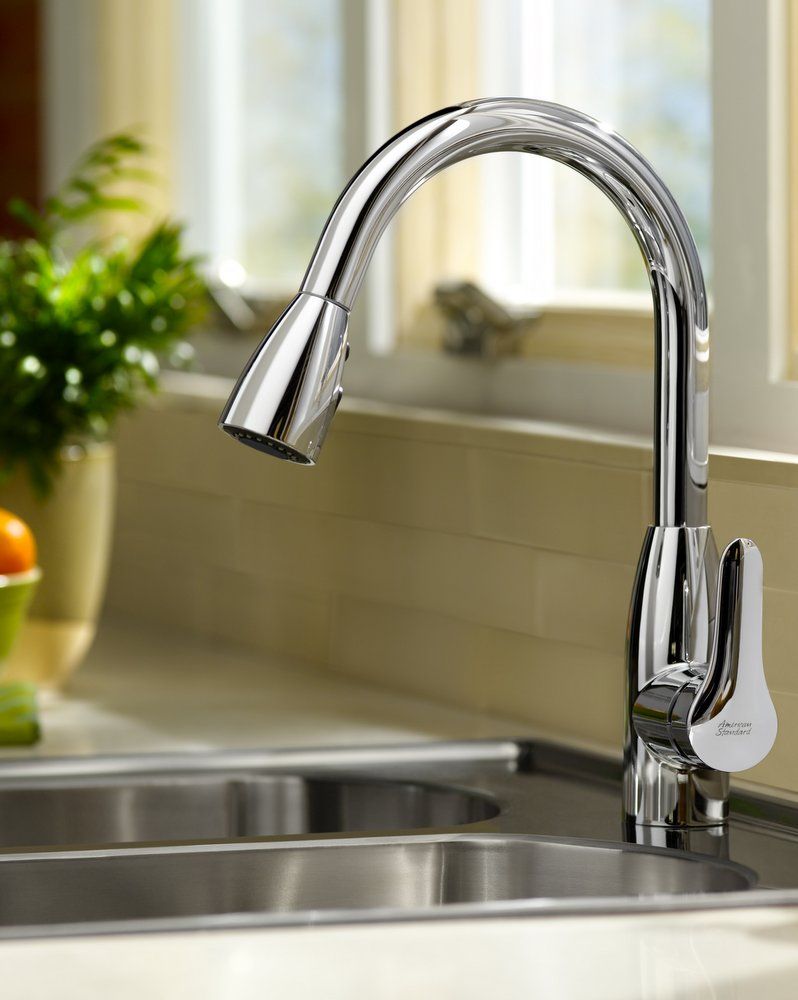
Here’s another place where an investment returns itself. An impressive faucet can make an old kitchen look much newer. It doesn’t need all the bells and whistles, but it should be big. Expect to spend between $150 and $300.

Budget tip: Do your homework, be patient, and scoop up one on sale.
A gleaming f aucet like this one 
will set you back about $100.

Newish cabinets

When it comes to fix-up costs, most of us already know that paint gives you the most bang for your buck. If your cabinets cry out for a quality boost, paint them.

Leave the doors hanging. Clean them with TSP and sand them smooth. Brush around the hinges and paint the rest with a small roller.

Skip the cabinet interiors but add new white shelf liners. With the right paint and prep, even laminates can be painted.

Budget tip: Primer is cheaper than semi-gloss paint. So, make your first coat a stain-blocking, quality primer, then sand lightly again, and top coat with a good semi-gloss acrylic. The primer will save you money and give you better coverage in the end.

Handsome hardware

If you’ve had the same knobs and pulls in your kitchen for 20 years, maybe it’s time for a makeover. Hardware is part of the kitchen’s jewelry. Bring home one sample and see what it looks like before committing to a full count. Browse online to see what’s trending and perfect for your kitchen’s style. If the present ones are top quality, remove them, clean them and replace.

Budget tip: If you have visible hinges that don’t make a style statement, a good carpenter can install hidden hinges to create a sleeker appearance. The visible holes for old hinge screws will have to be patched, so replacing hinges works only if you’re painting your cabinets.
Older cabinets were often custom-built on site
of solid wood. Updating quality workmanship 
isn't always necessary. Photo: Sotheby's

Statement countertops

Yes, countertops are a major investment, but buyers can be fussy about them.

Check what your competition has and try to match the quality in your own kitchen. If the standard is granite and you have old laminate, you could be losing serious buyers.

If the idea of spending money on new counters bothers you, consider the impact it will have on your home’s desirability, and factor into your decision what it costs each month to maintain your home while it’s on the market.

Get prices for granite, quartz, solid surface, concrete and even wood. Some countertop suppliers will throw in a complimentary sink to sweeten the deal.

Budget tip: Put a high-end surface on just an island or just the sink area and call it “custom styling.”

Matching appliances

Although you might get away with unmatched counters, major kitchen appliances that match will give a lackluster kitchen some credibility. Stainless steel is nice -- as in the top photo from Better Homes and Gardens -- but it isn’t always a requirement. Depending on your market, functioning appliances that look new and match could be “good enough.”

Budget tip: Some appliances like refrigerators can be painted with epoxy paint (refrigerators) or have a reversible front panel (dishwashers).

Gourmet touches 

A kitchen island -- even if it is a non-stationary one --
is the perfect place to stage some 
serious cooking props. Photo: Crate and Barrel
These are less important than the other upgrades I’ve listed. But they will definitely earn you extra credit. 

If you own a big, bright KitchenAid mixer or a fancy espresso machine, don’t hide them away unless your kitchen is so tiny they would add visual clutter. 

Other touches might be a stocked wine rack (Fill your emptied wine bottles with water, and cork them.), a beautiful cutting board, or a retro blender.

Budget tip: Visit a restaurant supply house and buy some pots or other cooking essentials that have that popular commercial look. Even second-hand items look good because those things are built to last!

Make selling your home a priority

If your kitchen is functional but leans too much towards builder-grade or old-fashioned, it could be preventing you from getting offers. These upgrades will add that touch of luxury buyers expect.

Sure, a fancy range hood, a trash compactor, custom tiled backsplash, wine chiller, roll-out shelving and other wish-list perks would be nice, but unless they are already in place, adding them probably means you’re over-fixing. Just budget your costs so you meet or beat what homes in your price range are offering.

Of course, maintaining your home’s major systems –electrical, plumbing, roofing, flooring – is more important than cosmetic additions to the kitchen. I am going to assume that your home is already safe and sound. Having a home inspection done before listing your home is a wise move.

Although you may have to spend some cash to check off all items on this list, money spent on a minor remodel in a kitchen typically returns 80 to 100% -- a better return than money spent in other areas of the home. So, go ahead, gussy up that kitchen!

You can get more DIY tips for selling your home in my three homestaging eBooks. Follow the link to learn more about these books. You are just 2 clicks away from starting your staging today!


Outdoor Decor in Five Easy Steps

Sunday, October 25, 2015
A staged home depends on seasonal touches to look loved and tended.

But when your home is for sale and the winter holidays approach, I know you have your hands full.

That’s why I wanted to share with you how easy it can be to put together an outdoor arrangement that spans the seasons, one that greets Realtors and their clients with something festive. 

The secret’s in the formula.

You can apply it to any floral arrangement when you want it to make a real statement at the front door or from the curb. 

Step one: start big

Start with a large container. And the perfect one is the jumbo pot that housed a display of summer annuals. Retire those plants and remove any bulbs you want to save for next spring. Leave the potting soil in the container, and leave any perennials that will winter over. 

A pot with personality is ideal, like a wine half barrel, a brass spittoon, a faux-finished plastic pot, or a lined wicker basket. Put it where it will give you the most curb appeal all winter. 

Paint your container if it needs refreshing or if you want to change it with the seasons. The same container can be black or brown in the fall for example, then gold or red in December, and maybe white for a fresh start in January. 

Step two: build a base

Lay on a couple of wreaths. This jump-start creates a base and adds importance to the arrangement. The wreaths could be real or artificial. Just lay them on the lip of the container or on the soil.

If you plan to locate the container on the porch or another protected area, you’ll have more leeway with what your wreaths are made from. Burlap, felt, fabric, or straw wreaths need shelter from the elements, but wreaths made from real or artificial greenery, tinsel, grapevines, twigs, plastic, or metal can handle any weather. 

I started the Christmas decoration with a 
tinsel wreath  and a plastic 
Della Robbia wreath. I let the vinca vine that was 
still growing in the pot peek out from the center,
and I wired some pine cones onto the bottom wreath.

Step three: add height

You need something tall to make your statement piece. It needn’t be weighty or fancy or expensive or rare. Branches are perfect. Professional decorators, florists and homestagers keep an arsenal of sticks, branches and poles to use this way.

If you have access to woodlands, take a hike and bring your pruners. You’re bound to find pretty limbs that are suitable au natural or spray painted. Craft stores and craft departments sell bamboo, willow, tall grasses, and twiggy stuff, all reasonably priced.

Insert your branches or sticks into the potting soil to anchor them firmly. If the branches are fresh and real, cut the stems at a sharp angle and poke them in so they can absorb moisture from the soil and stay fresh longer.

Your large items could also be a trellis, tuteur, obelisk or other garden construction. Even garden poles or a tomato cage inverted to make a pyramid can provide that structure your container garden needs. 


Here's a bird's eye view of the bamboo garden stakes 
inserted into the soil to make a tepee.

Step four: fill in

While taking that walk in the woods or when pruning your own landscape shrubs (or your neighbor's!), look for greenery that can fill in the center of the display. If real greenery isn’t available, use the faux stuff. Yes, real and fake can co-mingle!

You can begin the season with a potted mum, switch to ornamental kale around Thanksgiving time, and add silk poinsettias for Christmas. If you live in a mild climate, you have more options for incorporating plants like succulents, ferns, pansies, and potted bulbs like amaryllis and paperwhites.  

Step five: find details

Finish your work of art with some smaller items that define the season. Look through your props for those that will withstand some months outside. These will be the details that put your display over the top. You can change these as the season progresses.

Pumpkins, gourds and other autumnal objects give your container the right spin that will take you through Thanksgiving. After that you can replace them with red bows, glittery ornaments and whatever else you discover when you dig into your holiday decorations. Come January, just remove the obvious holiday trinkets and go for a fresh, wintry look built around pinecones, and greenery, or whatever might be blooming in the more southern states. Add an ornamental birdhouse or some ceramic animals for some whimsy.

Another detail that adds drama is lighting. You can tuck a spotlight into the arrangement, or place one where it will illuminate the area at dusk. A string of lights is another possibility, wrapped around the sticks, wound around the container, or nestled in the foliage.

Additional tips

When working on your container, place it on a bench or low table. You’ll do less bending and have a better view of what you’re creating.

If you’re selling your home and you’ve already decluttered as part of your home staging, I don’t want to encourage you to stockpile decorating items. But if you are a professional stager, a builder or real estate investor, I encourage you to schedule your décor purchases to save money. Buy decorating supplies on sale after the holidays. And look for marked-down decor props during the year at places like Michaels, Target, Walmart, TJMaxx, Hobby Lobby, and home improvement centers. 
 
Mixing in details like these snowflakes
and this ceramic bird will give 

your holiday decorations a custom
look instead of something off-the-shelf.

You can always spray paint ordinary decorations like wreaths, branches, leaves, pumpkins, lanterns, ornaments, bows, and even silk plants to match the season. Why not utilize silver gourds, red birdhouses, and glitter-encrusted branches at Christmas, the same items that were part of your autumn arrangement?

Bows make a big difference. If you plan it right, just changing the bow to match the season and replacing a real plant with a faux plant will fast-track you to the new season.

Remember that selling your home means selling your location. Remind prospective buyers of what’s appealing about your locale. Include seashells and driftwood in your arrangement if you live by the sea, tropical flowers if you live in the South, or skis and sleds if you live where it snows.

Get the look, get the book

Selling a home is stressful, but you can simplify some of your home staging tasks by following advice like this and other tips in my home staging eBooks.


Popular Posts