This Season's Darling: The Tabletop Christmas Tree
Wednesday, December 12, 2012
The simple answer is, “It depends.” It depends on whether you usually traditionally celebrate Christmas or Hanukkah.
It depends on whether children live in your home, and how nostalgic you are.
It depends on how uncluttered you want your home to look.
It depends on what your personal taste is, how much space is available in your home, how big your budget is, and what your schedule looks like.
One thing is for sure: there's always room and some money for a tabletop tree. It's seasonal but non-denominational. It's decorative, long-lasting, and fashionable. No matter what style your home reflects, you're bound to be able to buy or DIY a small artificial tree for the holiday season.
I’m talking about the tabletop trees that measure less than 18 inches – cute little things that bring a touch of color and maybe even humor to the smallest space. Spaces like a bath vanity, a foyer table, a bookcase, a mantel, or a nightstand.
I went a little crazy this year making tabletop trees for gifts, for clients, and for myself. Along the way, I learned a few what-not-to-dos, and discovered some quick and cheap ways to make them look special.
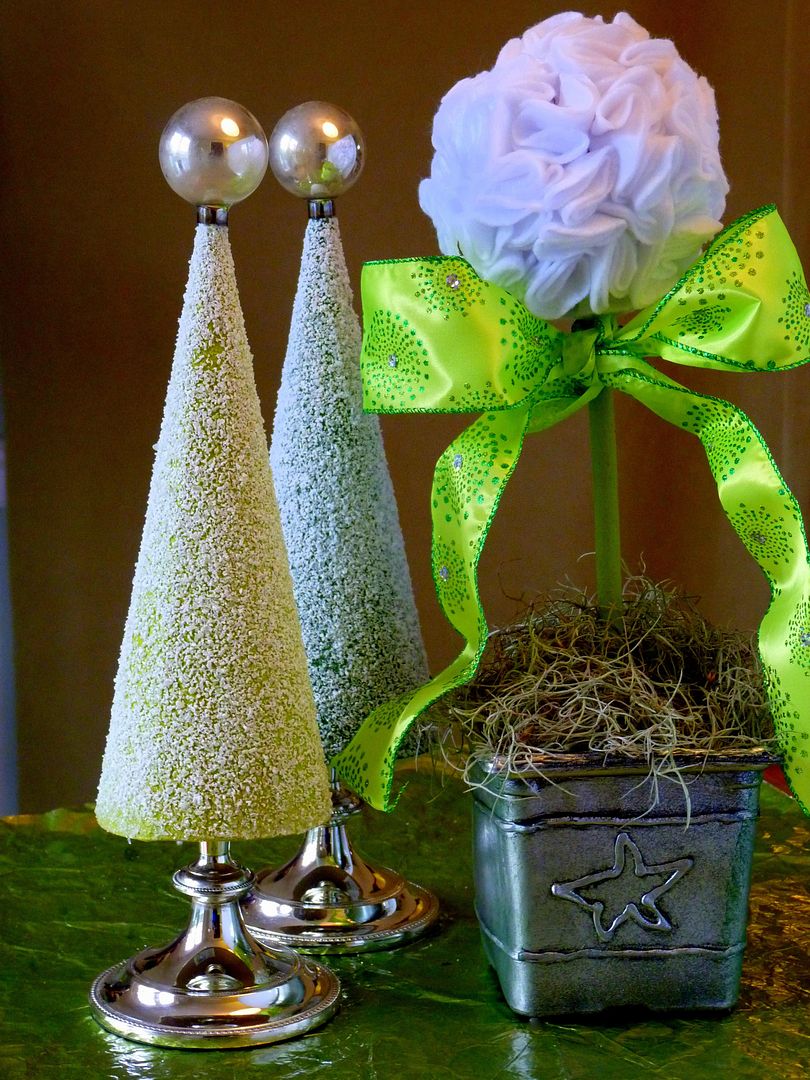
The two conical trees pictured above are Epsom salt-covered ones I've made before. I just popped a silver ornament on top of each, and set them on matched silver candlesticks for a different look. Next to it, the felt flower topiary in the fake pewter pot is leftover from last Christmas as well. I just freshened it with some new sphagnum moss and a bow in my favorite holiday color.
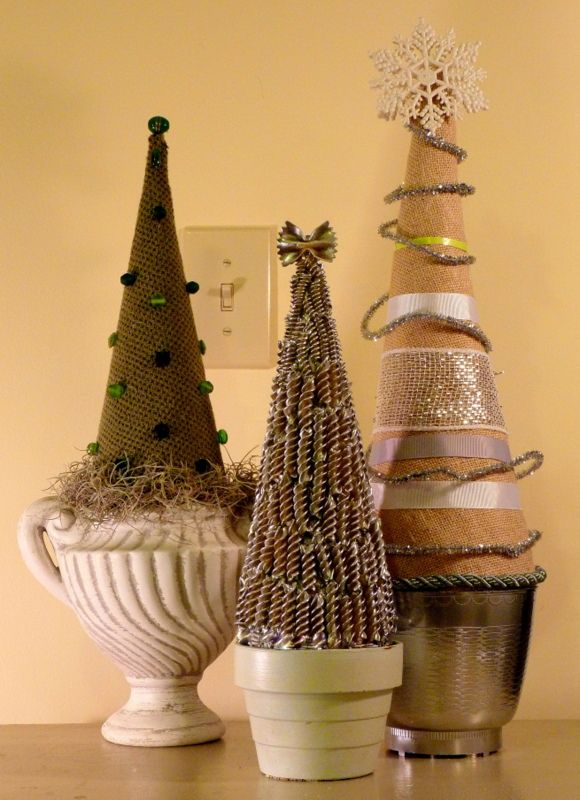 |
| A dishtowel with beads glued on, some pasta painted silver, and a burlap cone dressed in ribbons and pipe cleaners -- each one makes a different kind of miniature Christmas tree. And not one of them was difficult to make. In fact, it was fast and fun! |
Create shapes that are similar
If you’re going to be making more than one tree, I suggest making all your trees somewhat similar. You have enough to do without starting from zero with each DIY project. I used a cone shape for most of my trees. You can buy Styrofoam cones, floral foam cones, or paper mache cones. You can also fashion lightweight cones from cardboard or poster board.Get inspired using what you have
Let your materials inspire you. As usual, I gathered up odds and ends and craft supplies I wanted to use or recycle. Having a stash at your fingertips prompts creativity. Look for fabrics, jewelry, natural objects, ornaments, paint, or paper that speaks to you and fits with your décor.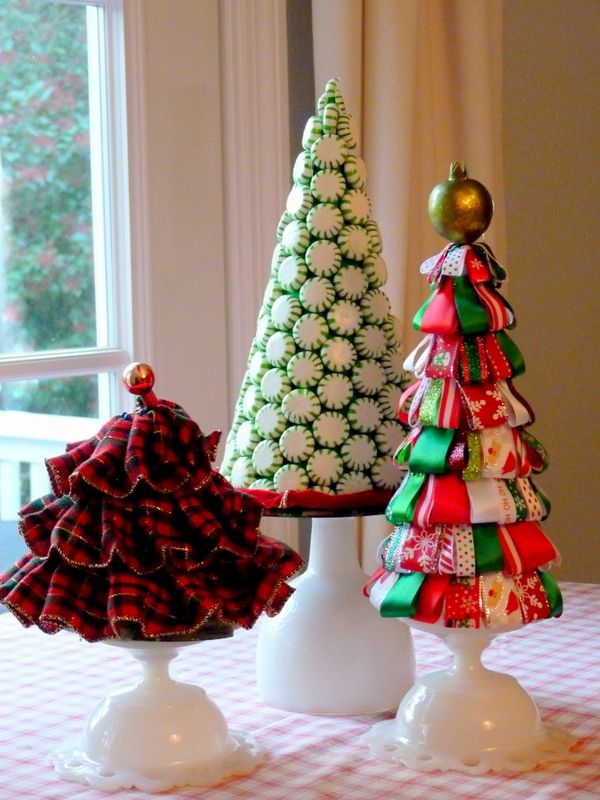 |
| Pedestals and bases make a big difference. Try different styles until you find the right one for your tree. I liked the look of milk glass under my one candy and two ribbon trees. |
Create some contrast
You can mix it up so each tree is unique and interesting. Put a funky burlap tree in a shiny silver planter. Add a glitzy snowflake to the top of a humble Kraft paper tree. Place new with old, rough with smooth, glossy with dull, black with white.Think in sturdy terms
If you want your trees to last over time, so you can bring them out again in years ahead, make them strong enough to be packed away. That means nothing flimsy, and nothing perishable that might invite mold or animals. My pasta tree and candy tree are “annuals,” rather than perennials.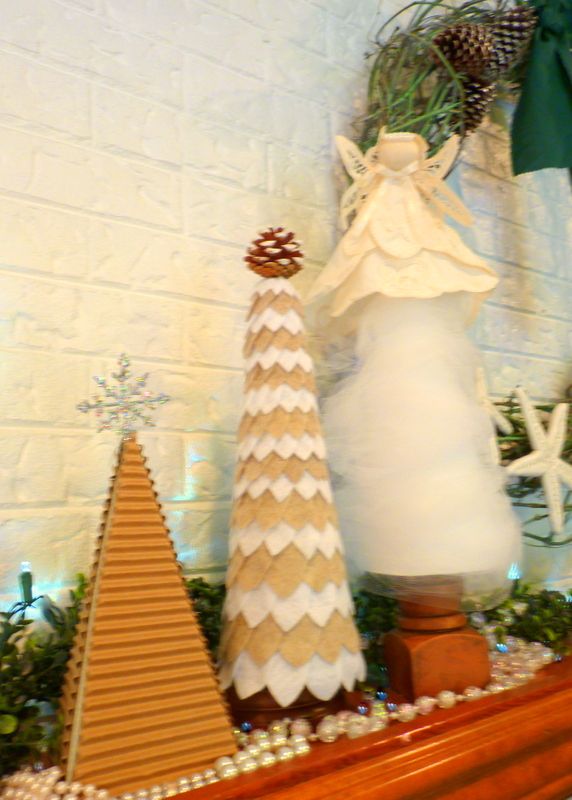 |
| Corrugated cardboard (one layer peeled away), felt petals, and tulle, are good makings for little trees. Trees this size make easy work of decorating a mantel, even a narrow one, for the holidays. |
Economize with your materials
Look for ways to save money by substituting less pricey materials for what you’d purchase finished at craft stores. I found I could make a paper mache cone by wrapping a store-bought one with aluminum foil and adding layers of newsprint smeared well with school glue. Once it’s hardened, you can slip the $4 cone out, so you have an extra cone (or more if you want to repeat the process).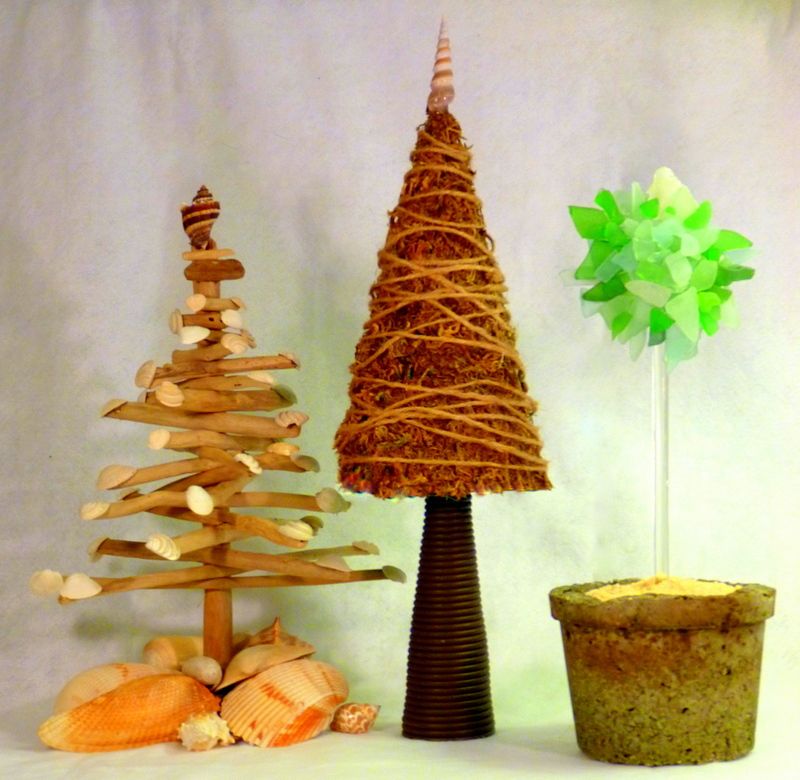 |
| The driftwood tree is just sticks, glue and shells. The middle tree is sheet moss I glued to a cardboard cone cut from half a sheet of poster board, set on a metal candlestick. And the topiary is sea glass glued to a plastic salad spoon stuck in a sand-filled hypertufa pot. |
Last year's topiaries captured my heart. This year, I am infatuated with tabletop trees. And I’m not the only one. I’m seeing them in all the stores, in magazines, and online. On my Pinterest "Tabletop Trees" Board, I can find over 45 of my favorites.
Let me help you stage
Do you have a home on the market? Have you staged it? No matter where you live or what your home is like, it’s already staged, vacant or inhabited, clean or cluttered – it’s staged! You might as well stage it to sell! Download my eBook, DIY Home Staging Tips to Sell Your Home Fast and for Top Dollar, so you can quickly and thriftily improve the marketability of your home for sale.